Where to stay in Bali, area by area: Seminyak, Canggu, Uluwatu, Ubud, Sanur, Nusa Dua and more, with who each suits, beaches and airport access.
Choosing where to stay in Bali shapes your whole trip more than almost any other decision. The island is bigger than it looks on a map, and the south is busy: Wikivoyage notes that traffic jams are common all year, especially around Kuta, Legian and Seminyak. Pick the wrong base and you spend your holiday in a car. Pick the right one and the beach, the rice fields or the surf break is on your doorstep. There is no single best area to stay in Bali, only the best area for the trip you have in mind.
Below, each area is covered by vibe, who it suits, beach, access from Ngurah Rai International Airport (DPS) and a few well-known things nearby. When you are ready to book, browse our hotels and villas.
Bali Areas at a Glance
Nightlife level is our editorial judgement.
| Area | Best for | Vibe | Beach | Nightlife (editorial) |
|---|---|---|---|---|
| Seminyak | Couples, shoppers, food lovers | Upscale, stylish | Long grey-sand beach | High |
| Canggu (Berawa, Pererenan) | Surfers, digital nomads, young travellers | Trendy, cafe culture | Dark sand, surf, not ideal for swimming | Medium to high |
| Kuta & Legian | First timers on a budget, beginner surfers | Busy, lively | Long sunset beach with consistent waves | High |
| Jimbaran | Families, couples, seafood lovers | Relaxed bay | Calm, sheltered bay | Low |
| Uluwatu & the Bukit | Experienced surfers, couples | Clifftop, dramatic | Small coves below cliffs, big surf | Medium |
| Nusa Dua | Families, resort stays | Gated, manicured | White sand, calm, good for swimming | Low |
| Sanur | Families, older travellers, island hoppers | Quiet, easy-going | Calm water, 5 km beachfront path | Low |
| Ubud | Culture, wellness, nature | Artsy, green, inland | No beach | Low to medium |
| Nusa Lembongan & Nusa Penida | Snorkellers, divers, adventurers | Island time, rugged | White-sand coves, clear water | Low |
| Amed (East Bali) | Divers, snorkellers, avoiding crowds | Slow fishing villages | Black volcanic sand, reef close to shore | Low |
| North Bali (Lovina, Munduk) | Avoiding crowds, nature, cool air | Quiet, traditional | Black sand and calm water (Lovina), no beach (Munduk) | Low |
Seminyak

Vibe: Seminyak sits on the west coast just north of Kuta and Legian. It has become one of Bali’s best-known areas thanks to its high density of high-end shopping and fine dining, and Wikivoyage describes the atmosphere as more sophisticated and laid-back than Kuta.
Who it suits: Couples, shoppers, food lovers and anyone who wants nightlife with a polished edge. Seminyak is home to many of Bali’s best-known bars and clubs, and it is the island’s centre for fashion boutiques, designer stores and art studios.
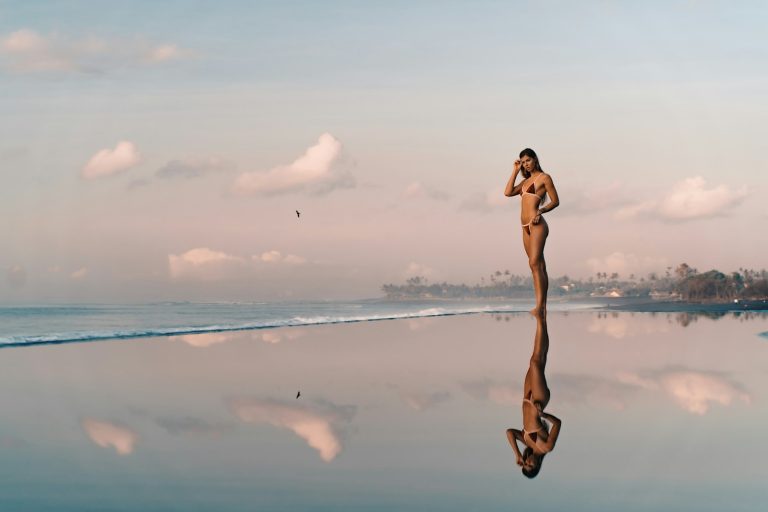
Beach: Seminyak Beach and Petitenget Beach form a continuous stretch of grey sand that is noticeably quieter than Kuta and Legian.
Getting there: Varies with traffic. Seminyak is part of the main west coast strip of South Bali and can get very congested, with Jalan Laksmana a known black spot.
Nearby: Pura Petitenget, a compact beachside temple known for spectacular ceremonies.
More: Seminyak area guide and where to eat and drink.
Canggu (Including Berawa and Pererenan)
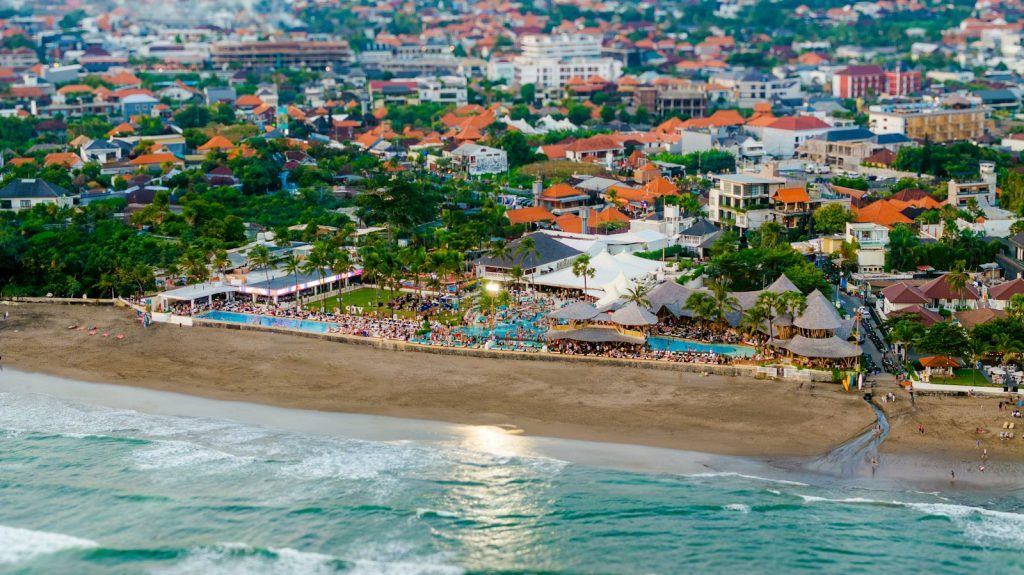
Vibe: Canggu is a coastal village about 10 km northwest of Kuta. As recently as 2010 it was mostly rice fields, and it has become one of Bali’s most popular destinations since the early 2020s, with villas, cafes and hotels replacing much of the farmland. Berawa marks the southern end of greater Canggu, while Pererenan sits further up the coast toward Cemagi.
Who it suits: Surfers, digital nomads and younger travellers who like a strong cafe and restaurant scene.
Beach: Canggu has nine beaches used by visitors, including Batu Bolong, Echo Beach, Berawa and Pererenan. The sand is dark grey or black, and the beaches are not especially good for swimming, but they offer renowned and challenging surf.
Getting there: Varies with traffic. Wikivoyage warns of terrible traffic in the area and suggests booking a stay with an airport pickup as the easiest way to arrive.
Nearby:
- Pura Batu Bolong and Pura Batu Mejan, two beachside temples that are hundreds of years old
- Tanah Lot, the sea temple on an offshore rock reachable on foot only at low tide, about 20 minutes away by car
More: Canggu area guide.
Kuta and Legian
Vibe: Kuta is next to Ngurah Rai International Airport. Wikivoyage calls it surfer central and the most heavily developed area in Bali, with lots of shopping and nightlife. Legian, just north of Kuta and south of Seminyak, runs between Jalan Melasti and Jalan Dhyana Pura and offers the same easy access to shops and bars with a slightly more relaxed feel.
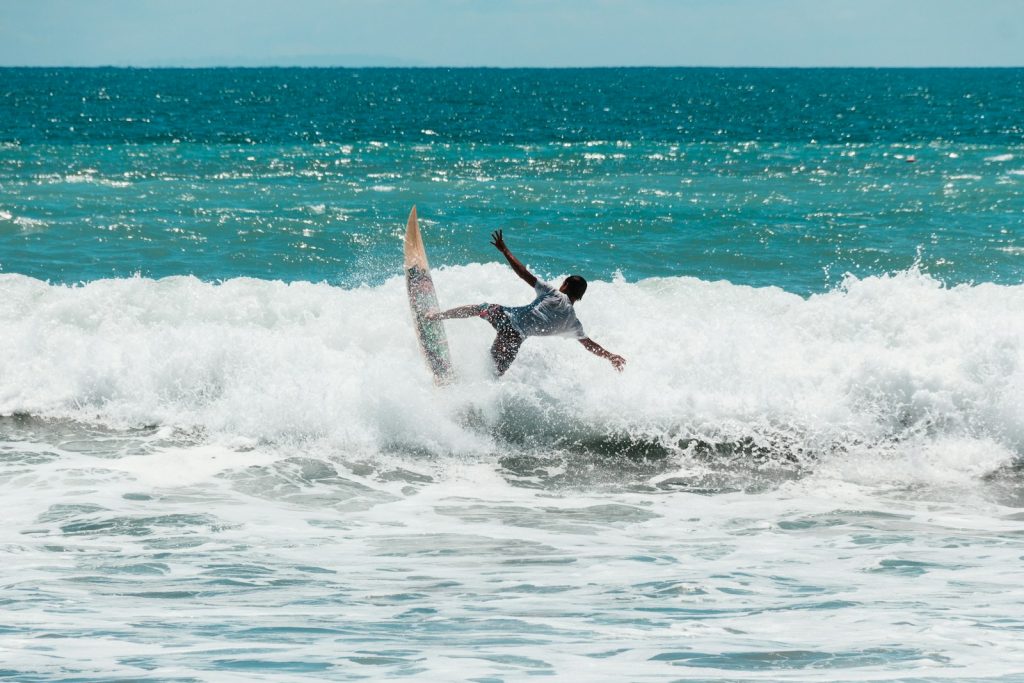
Who it suits: First timers who want to be close to the airport and to everything, travellers on a budget, and beginner surfers. Surf lessons and board rental are easy to find in Legian, and Kuta’s consistent waves have long drawn surfers, particularly from Australia.
Beach: Kuta Beach runs for about 2.5 km and is also known as Sunset Beach. Legian Beach is rated one of the best in Bali for watching the sunset.
Getting there: Kuta is right by the airport. Legian is about 20 minutes by car.
Nearby:
- The Bali Bombing Memorial on Jalan Legian, a carved stone monument with a marble plaque bearing the names of those killed in 2002
- Legian’s restaurants and entertainment spots, the commercial hub of the Kuta area
More: Kuta area guide.
Jimbaran
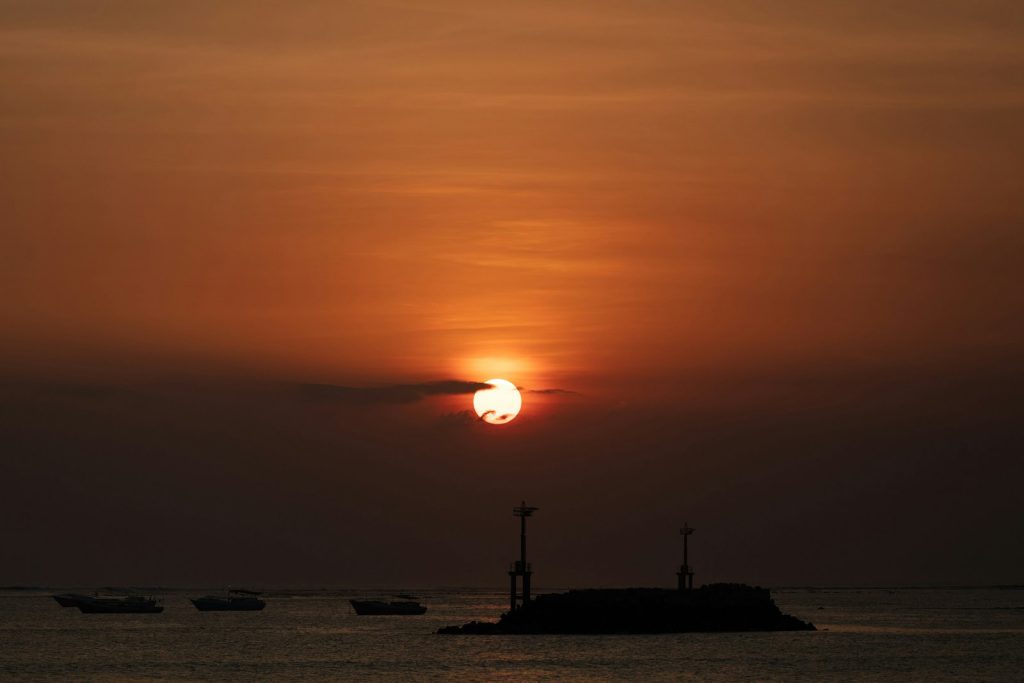
Vibe: Jimbaran is a fishing village and resort area just south of the airport, at the narrowest point of the Bukit Peninsula. It has kept some local character, with plenty of small lanes.
Who it suits: Families, couples and anyone who wants a calm beach close to the airport, including for a first or last night.
Beach: The bay has fine white sand, and its calm water makes it suitable for swimming for children and adults alike.
Getting there: About 10-15 minutes south of the airport.
Nearby:
- Seafood dinners on the beach, where you choose your catch and it is grilled over coconut husks
- The traditional fish market at the northern end of the bay, where the catch comes in every morning
- Garuda Wisnu Kencana Cultural Park in Ungasan, home to a monument about 121 m tall, completed in 2018
More: Jimbaran area guide.
Uluwatu and the Bukit
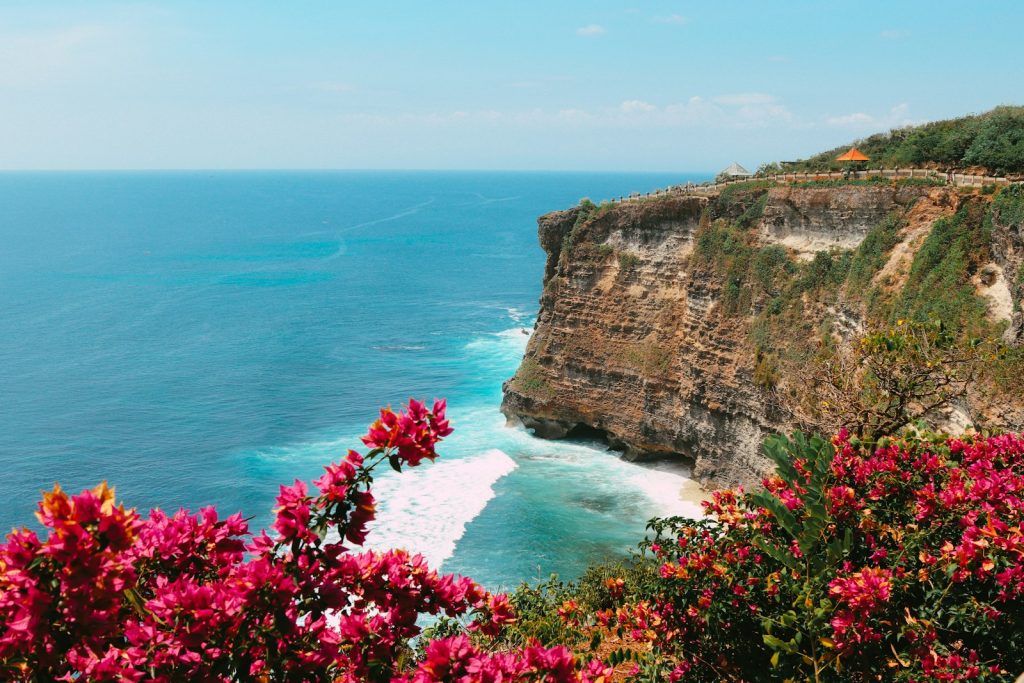
Vibe: The Bukit Peninsula at Bali’s southern tip is rugged and dry, with a dramatic clifftop landscape. It was a quiet backwater until surfers put it on the map.
Who it suits: Experienced surfers first of all. The main breaks are Uluwatu, Dreamland, Padang Padang, Bingin/Impossibles and Suluban, and most suit advanced or expert surfers because the waves are big. Couples also come for the clifftop views and sunsets.
Beach: Small white-sand coves tucked below the cliffs. Padang Padang is about 110 m long and reached by 120 steps and a path between a fallen rock and the cliff. Balangan is rated by some as the best beach in Bali and sees relatively few visitors.
Getting there: Wikivoyage puts the drive from Kuta to Uluwatu at 30-40 minutes on winding roads. Allow more at busy times.
Nearby:
- Uluwatu Temple, set on the edge of a 70 m cliff above the sea, with a Kecak dance performed daily at 18.00 on the clifftop
- Padang Padang, a world-famous surf break and host of the annual Rip Curl Cup
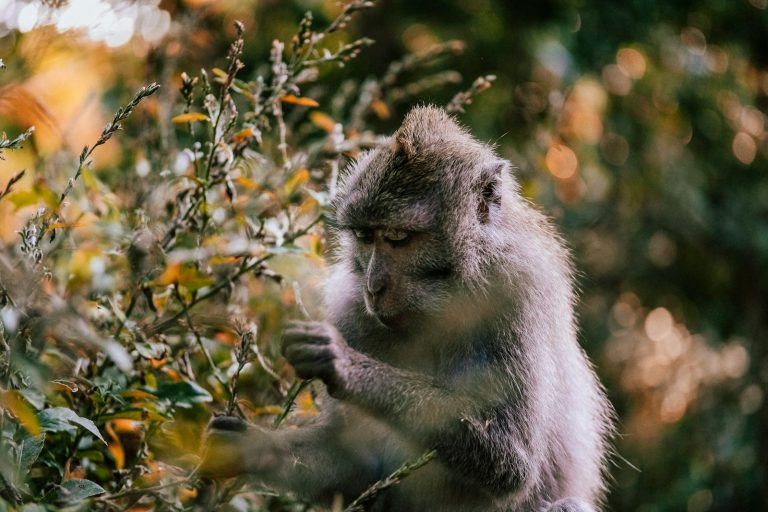
A tip for Uluwatu Temple and Padang Padang: resident monkeys are known for snatching sunglasses, phones and flip-flops.
More: Uluwatu area guide.
Nusa Dua
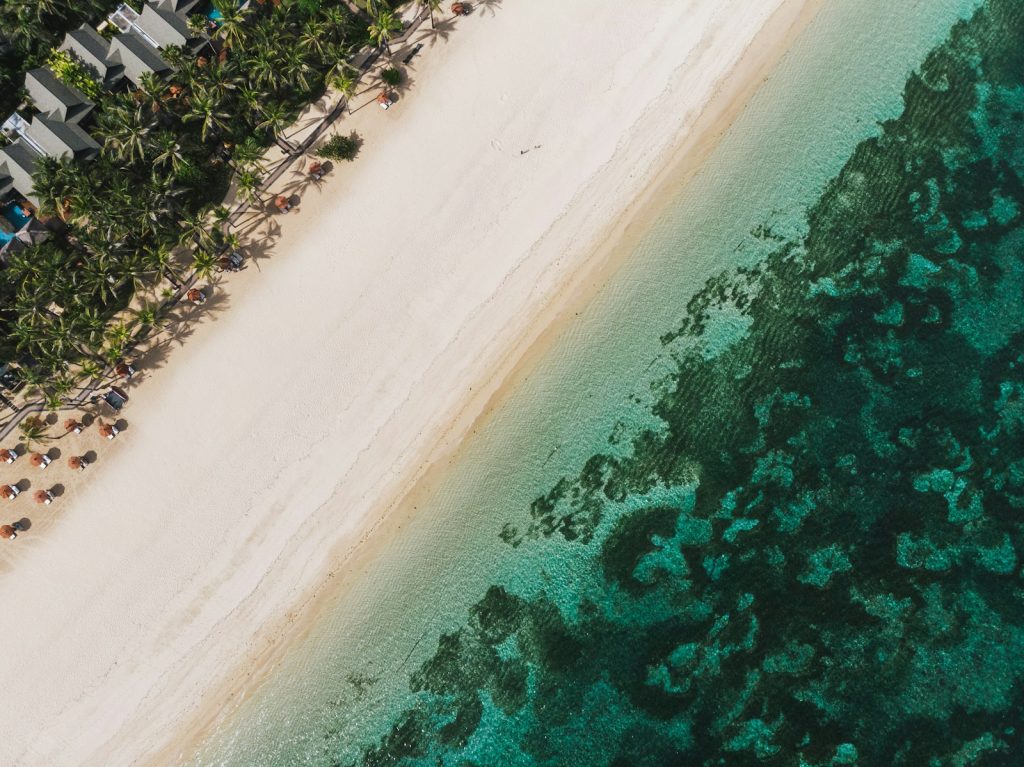
Vibe: Nusa Dua is a purpose-built resort area developed from the 1970s by the Indonesia Tourism Development Corporation (ITDC). It covers 350 hectares, encloses more than 20 large resorts and has security checkpoints at its entrances. Wikivoyage calls it sanitised and the least Balinese part of the island.
Who it suits: Families and travellers who want a resort holiday with calm water and little hassle.
Beach: White sand, long and safe for swimming. Geger Beach, at the western edge of the enclave, faces east and has some of the warmest water in Bali.
Getting there: About 20-30 minutes by car from the airport. The Bali Mandara Toll Road connects the airport with Nusa Dua.
Nearby:
- Water Blow, where Indian Ocean waves crash against limestone cliffs and can spray up to 30 m high
- Water sports at Tanjung Benoa, including parasailing, jet skiing, snorkelling and intro dives
- Museum Pasifika and the open-air Bali Collection shopping area
More: Nusa Dua area guide.
Sanur

Vibe: Sanur, on the southeast coast east of Denpasar, has plenty of restaurants and places to stay but keeps a quiet, relaxed feel. While Kuta is Sunset Beach, Sanur is known as Sunrise Beach.
Who it suits: Families, older travellers and anyone who likes to walk. It is also the most practical base for island hopping, since fast boats to Nusa Penida and Nusa Lembongan use the harbour at the end of Jalan Matahari Terbit.
Beach: Calm water with traditional fishing boats on the sand, backed by a paved beachfront path that runs about 5 km from the Jalan Mertasari area north to Jalan Hang Tuah.
Getting there: About 20-30 minutes from the airport.
Nearby:
- Museum Le Mayeur, the former home of Belgian painter Adrien-Jean Le Mayeur, showing around 80 of his works
- Day trips by fast boat to Nusa Lembongan and Nusa Penida
More: Sanur area guide.
Ubud

Vibe: Ubud sits inland in Gianyar Regency and is promoted as Bali’s arts and culture centre, surrounded by farms, rice paddies and forest. Yoga, wellness and creative pursuits are a big part of life here. Wikivoyage is blunt that traffic in central Ubud is terrible, so a stay just outside the centre can feel very different.
Who it suits: Culture seekers, wellness travellers, couples and families who want nature over beaches. With dance and shadow puppet performances every night, it is also a strong choice for first timers who want to see a more traditional side of Bali.
Beach: None. Ubud is inland, so plan day trips to the coast.
Getting there: Around 1.5 hours by car from Ngurah Rai International Airport, according to The Jakarta Post. Traffic can make it longer.
Nearby:
- The Sacred Monkey Forest Sanctuary, a nature reserve and temple complex on Jalan Monkey Forest, open 09.00-18.00 with last entry at 17.00
- Ubud Palace (Puri Saren Agung), at the corner of Jalan Monkey Forest and Jalan Raya Ubud, next to Ubud Market
- The Campuhan Ridge Walk, a 2 km paved path, and the Tegallalang rice terraces, about 10 km north of Ubud
More: Ubud area guide and things to do in Bali.
Nusa Lembongan and Nusa Penida
Vibe: Two islands southeast of Bali. Nusa Lembongan lies 12 km across the Badung Strait in Klungkung Regency and covers about 8 square kilometres. It has virtually no cars, and Wikivoyage calls it a world away from the pace of South Bali. Nusa Penida is much larger at about 203 square kilometres, hilly and drier than Bali, with a wild, rugged character and limestone cliffs.
Who it suits: Snorkellers, divers and travellers who want to slow down. Lembongan suits a relaxed stay. Penida suits adventurers, since its roads are rough and hilly away from the north coast.
Beach: White-sand coves and clear water. Mushroom Bay on Lembongan and Crystal Bay on Penida are both good for snorkelling.
Getting there: Drive to Sanur, then take a fast boat. The crossing takes about 30 minutes to either island.
Nearby:
- The Nusa Lembongan mangroves, around 212 hectares, which you can explore by traditional outrigger boat
- The suspension bridge to Nusa Ceningan, opened in 2017
- Kelingking Beach, Broken Beach and Angel’s Billabong on Penida, plus Manta Point for year-round manta ray encounters
More: Nusa Penida area guide.
Amed (East Bali)
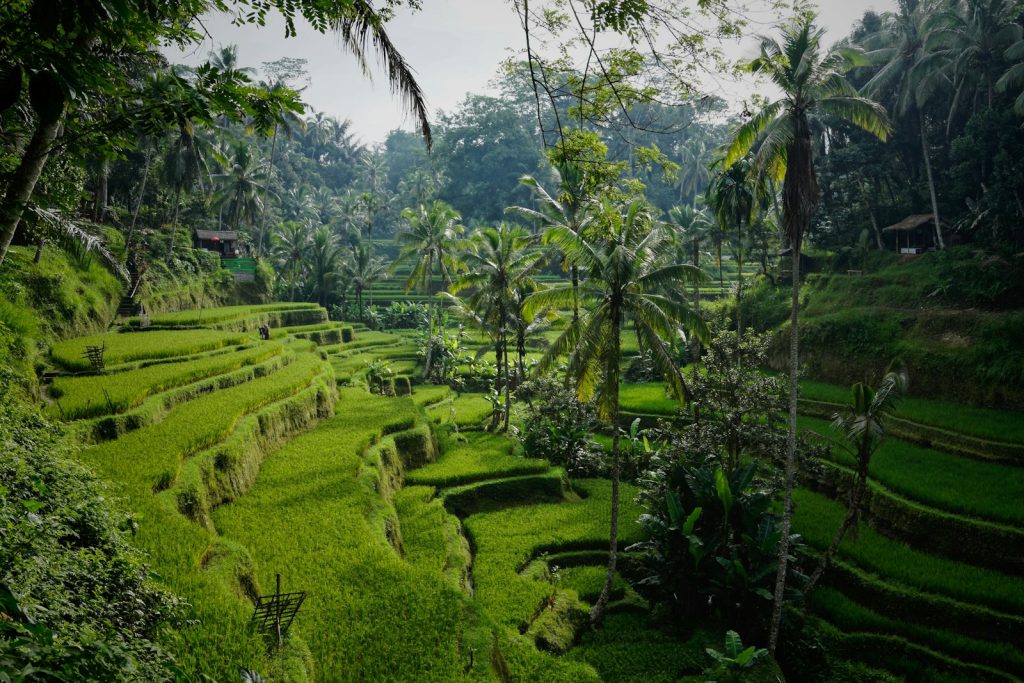
Vibe: In tourism terms, Amed means a 14 km stretch of east coast villages including Jemeluk, Bunutan, Lipah, Selang and Aas, in Karangasem Regency. The pace is slow and the coastal scenery is striking. The area once had traditional salt fields on its beaches.
Who it suits: Divers, snorkellers, honeymooners and anyone who wants to avoid crowds. Amed is quiet at night and not a late-night drinking spot.
Beach: Black volcanic sand, with Mount Agung rising behind. A reef follows much of the coastline, so good snorkelling starts within metres of the shore.
Getting there: A little more than two hours by car from the airport.
Nearby:
- The Japanese Wreck at Banyuning, in 2-30 m of water
- The USAT Liberty wreck at Tulamben, about 12 km northwest of Amed, lying roughly 25 m from shore and reachable with a short swim from the beach
More: Karangasem area guide.
North Bali (Lovina and Munduk)
Lovina stretches along the north coast about 5-15 km west of Singaraja and remains far quieter than the south. Its narrow black-sand beaches face water that is relatively calm compared with the southern surf. Early-morning dolphin-watching boat trips are the classic activity, and the Banjar hot springs and Brahma Vihara Arama, Bali’s largest Buddhist monastery, are nearby. The drive from the airport takes about 3 hours.
Munduk is a highland village in Buleleng, part of the central highlands around Bedugul that sit at 700 m or more, where the air is distinctly cooler. Munduk Waterfall is one of the most impressive accessible falls on the island, the area grows coffee, vanilla, cloves and cacao, and the landscape is shaped by the three crater lakes of Bratan, Buyan and Tamblingan. Lake Tamblingan lies within Munduk village at 1,217 m, ringed by rainforest, and Pura Ulun Danu Beratan appears to float on Lake Bratan near Bedugul.
Both suit travellers who want to avoid crowds and trade beach clubs for nature. More: Lovina and Buleleng area guides.
Which Area Is Right for You?
- First timers: Seminyak or Legian, close to the airport and to everything in the south, plus a few nights in Ubud.
- With kids or with family: Sanur, Nusa Dua or Jimbaran, for calm, swimmable water.
- Solo travellers: Canggu for surf and a social cafe scene, or Ubud for yoga and culture.
- Close to everything: Seminyak, Legian or Kuta, though traffic still makes short trips slow.
- To avoid crowds: Amed, Lovina, Munduk or Nusa Lembongan.
- Surfers: Uluwatu and the Bukit for experienced riders, Kuta and Legian for beginners.
Practical Notes
- Tourist levy: Every foreign tourist pays a levy of IDR 150.000 per visit to Bali. It has been in force since 14 February 2024 under Bali Provincial Regulation No. 6 of 2023, and the official provincial levy site is Love Bali.
- Stay in licensed accommodation: Bali Governor Circular (Surat Edaran) No. 7 of 2025, launched on 24 March 2025, requires foreign tourists to stay in licensed accommodation businesses (“tempat usaha akomodasi yang berizin”). Check that your villa or guesthouse is properly licensed before you book.
- Respect the rules: The same circular requires modest dress at temples and public places, bans entering the inner areas of temples unless praying, and bans single-use plastics and littering.
- Traffic: Wikivoyage notes that one-way streets in Kuta, Legian and Seminyak can turn a 500 m trip into a 15-minute walk or up to 30 minutes by car. Base yourself near what you want to do most.
Frequently Asked Questions
Is Canggu nicer than Seminyak?
It depends on your style. Seminyak is more polished, with high-end shopping, fine dining and a quieter grey-sand beach. Canggu is younger and more surf-focused, popular with digital nomads, with dark-sand beaches that are better for surfing than swimming. Both areas deal with heavy traffic.
What is the best area to stay in Bali for first timers?
Seminyak or Legian are easy first bases, close to the airport with plenty of restaurants, shops and beach within walking distance. If you also want culture, add a few nights in Ubud.
Where to stay in Bali with kids?
Sanur, Nusa Dua and Jimbaran. All three have calm water that suits swimming, and Sanur adds a flat 5 km beachfront path that is easy for families.
Ready to choose? Compare hotels and villas by area, see the best areas in Bali and check what’s on this week.