A circle of men, one chant and no instruments: what Kecak is, where it came from, the story it tells and how to watch it at Uluwatu, with times, tickets and tips.
Late in the afternoon at Uluwatu, dozens of bare-chested men walk into a stone amphitheatre on the edge of a cliff. They sit in tight circles around a flaming lamp and start to chant: cak, cak, cak. There is no gamelan, no drum, no flute. For the next hour their voices are the whole orchestra, while the sun drops into the Indian Ocean behind them.
This is Kecak, Bali’s most famous dance performance. This guide explains what Kecak is, how a trance ritual became an island icon, the story it tells and how to watch it well.
What is Kecak?
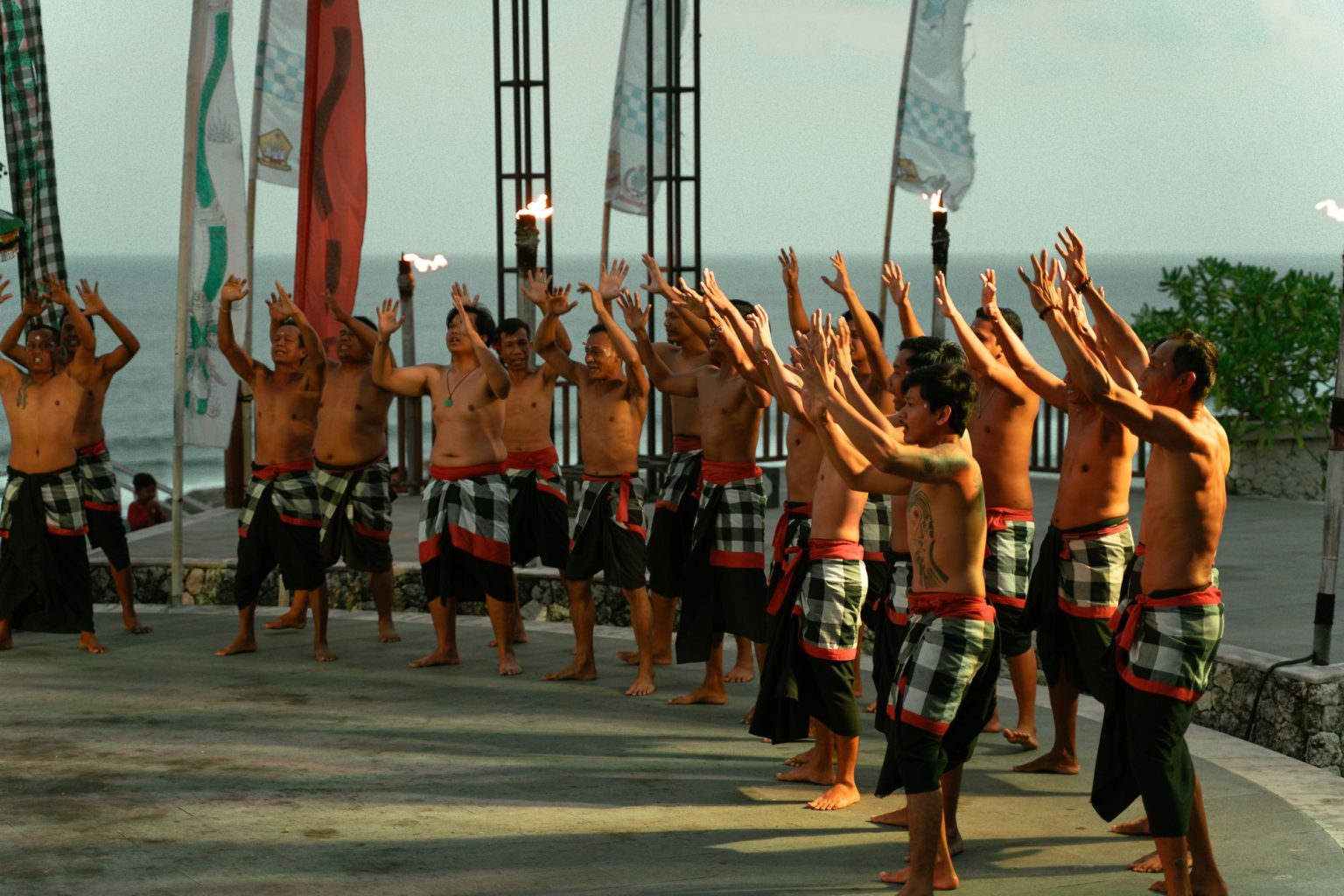
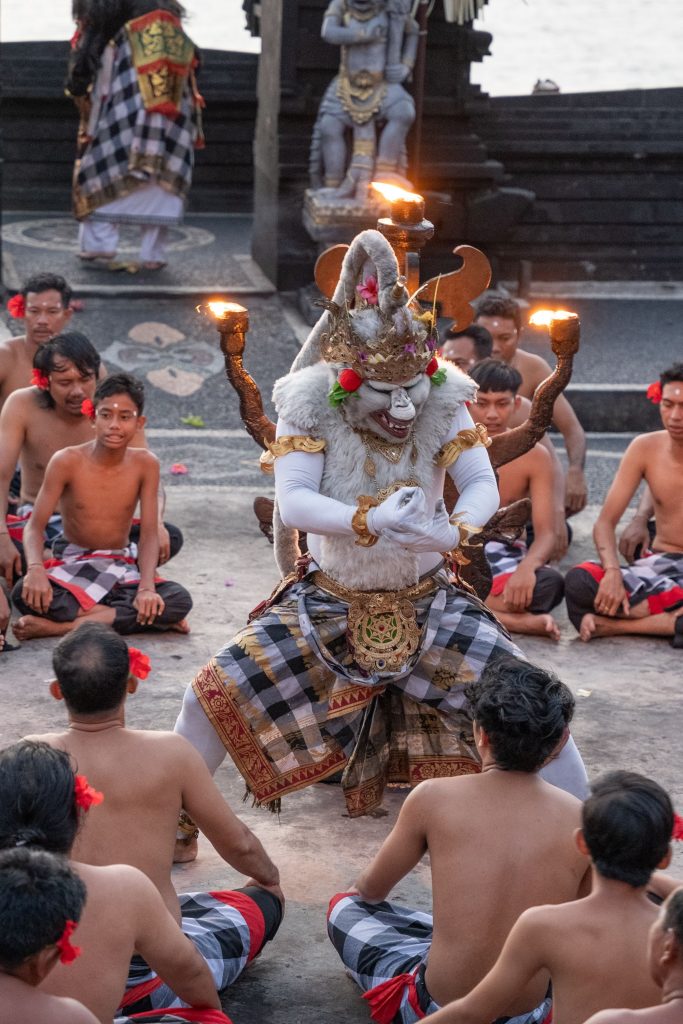
Kecak is a dance drama performed by a large chorus of men, usually 50 to 100 performers and sometimes as many as 150. Sitting in concentric circles around an oil lamp, they chant interlocking rhythms of cak that rise, fall and speed up, while they sway and throw their arms up together.
In the middle, costumed dancers act out an episode from the Ramayana, the Hindu epic of Prince Rama and Princess Sita. The chorus plays many roles at once: one moment it is the music, the next it is an army of monkeys. Every sound you hear comes from a human voice, with no instruments at all. That is what makes Kecak unlike any other Balinese performance.
From trance ritual to sunset stage
Kecak grew out of Sanghyang, a Balinese trance and exorcism ritual. In Sanghyang, a male chorus chants to bring dancers into trance, and the rhythmic cak comes from that chorus.
In the 1930s, Balinese dancer Wayan Limbak and German painter and musician Walter Spies, who lived in Bali, reshaped the chant into a staged performance. Limbak had already added movements from Baris, the Balinese warrior dance, to the role of the chorus leader in the 1920s. Together they gave the chorus a story from the Ramayana and built a show for visitors, and Limbak later took it on tour abroad.
The chorus is the music and the army. Every sound comes from a human voice.
So Kecak sits between two worlds. It is a modern creation, less than a hundred years old, but it is rooted in something much older. The fire scene still keeps a trace of the trance it came from.
The story: the Ramayana in one hour
Most performances tell the same chapter of the Ramayana. Knowing the outline helps you follow the action from the first minute.
1. Exile in the forest
Prince Rama, his wife Sita and his brother Laksmana live in exile in the forest. A golden deer appears and Rama goes off to hunt it, leaving Sita behind.
2. The kidnapping
The demon king Rahwana (Ravana) seizes the moment and carries Sita away to his kingdom. The bird Jatayu fights to stop him and is struck down.
3. Hanuman’s search
The white monkey Hanuman, Rama’s loyal ally, sets out to find Sita. He is the crowd favourite: agile, playful and brave.
4. Fire and the final battle
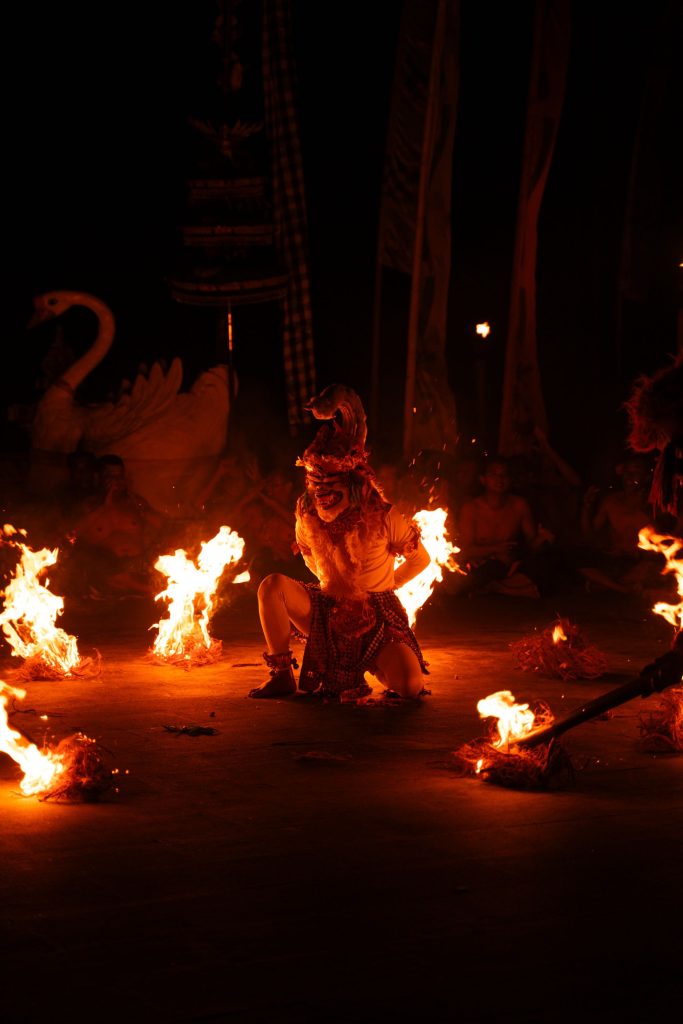
Hanuman is captured and set on fire, the scene that gives the show its fire dance. In the end Rama, with the help of the monkey army, battles Rahwana and wins Sita back.
The fire dance
The fire scene is the moment everyone waits for. The performer who dances through the flames is blessed by a priest beforehand and enters a trance, so that he does not feel the pain.
It is the clearest link between today’s show and the Sanghyang ritual Kecak grew from. Watch it from a respectful distance and stay seated until the dancer has left the circle.
Where to watch Kecak in Bali
Kecak is performed in several places around the island, and the setting changes the experience completely.
- Uluwatu Temple: the most famous show, in an open-air amphitheatre on the clifftop next to the temple, timed with the sunset. It is also the busiest.
- Ubud: evening Kecak and fire dance shows lit by torches instead of the sunset, easy to combine with dinner in town. See Kecak and Fire Dance Show tickets in Ubud.
- Tanah Lot Temple and Garuda Wisnu Kencana Cultural Park: both also stage Kecak. Check the venue for the current schedule before you go.
Uluwatu Kecak at a glance
Times and tickets
Show time: daily, 18.00-19.00, with extra sessions possible in peak season.
Kecak ticket at the box office: IDR 150.000 for adults and IDR 75.000 for children. Booking online in advance is usually a little cheaper.
Temple entrance is paid separately: IDR 60.000 for international adults and IDR 40.000 for children aged 4 to 12, plus a small parking fee.
How it works
Two local troupes take turns on different days of the week. Pay in cash rupiah or QRIS. Uluwatu is an active Hindu temple, so dress modestly and wear the sarong and sash required on the temple grounds.
Prices and times can change, especially around ceremonies and holidays, so treat these as a guide and check close to your visit.
Local tips
- Arrive early. Aim to be at Uluwatu between 16.00 and 16.30 to buy tickets without the rush and pick a good seat.
- Sit in the middle or upper rows. You see the full circle of dancers with the ocean behind them.
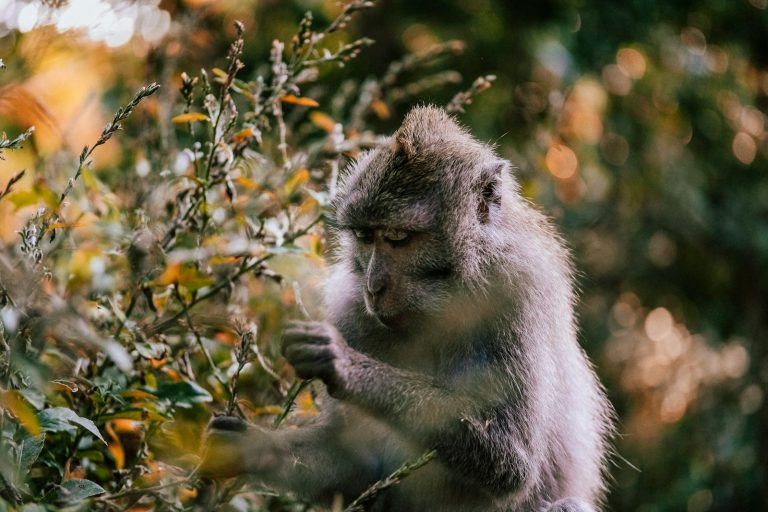
- Guard your things. The temple monkeys snatch sunglasses, hats and phones. Put loose items in your bag before you walk in.
- Bring cash. The box office takes rupiah and QRIS, so do not count on cards.
- Stay to the end. The final chant is part of the performance, not a signal to leave.
Plan your Kecak evening
Make a day of it in the south: explore the Uluwatu area, read up on Uluwatu Temple, or let someone else handle the driving with the Tanah Lot, Padang Padang Beach, Uluwatu Sunset and Kecak Dance Day Tour. Want to understand more of what you see around the island? Start with our guide to canang sari, and choose your base with where to stay in Bali.
Come early, sit high and let the chant do the rest.
Watched at sunset with the ocean below, Kecak is one of those Bali moments that stays with you long after the trip.