Daily offerings, temple festivals, the Day of Silence and the etiquette that goes with them: a visitor’s guide to the living culture of Bali.
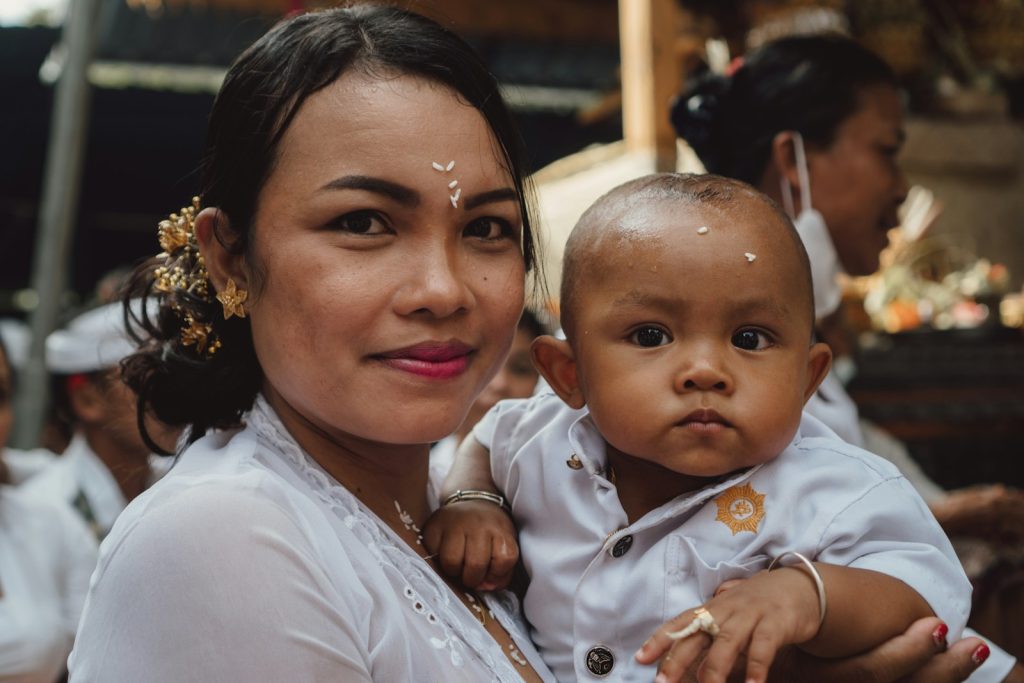
Spend a single morning in Bali and you will see it: a woman placing a tiny palm-leaf tray of flowers on the pavement, incense curling from a shrine at the petrol station, a procession of villagers in white and gold carrying towers of fruit on their heads. Religion here is not something kept for Sundays. It shapes the calendar, the architecture, the names people carry and the rhythm of every day.
An island in balance
The large majority of Balinese follow Balinese Hinduism, a local blend of Hindu, Buddhist and older animist beliefs that sets the island apart from the rest of majority-Muslim Indonesia. At its heart is Tri Hita Karana, the idea that a good life rests on three kinds of harmony: between people and the divine, between people and each other, and between people and nature.
You can see that philosophy at work in the banjar, the neighbourhood council every married man belongs to. The banjar organises ceremonies, cremations and temple festivals, and it is the reason a whole village can turn out, perfectly dressed, for a ritual that starts at dawn.
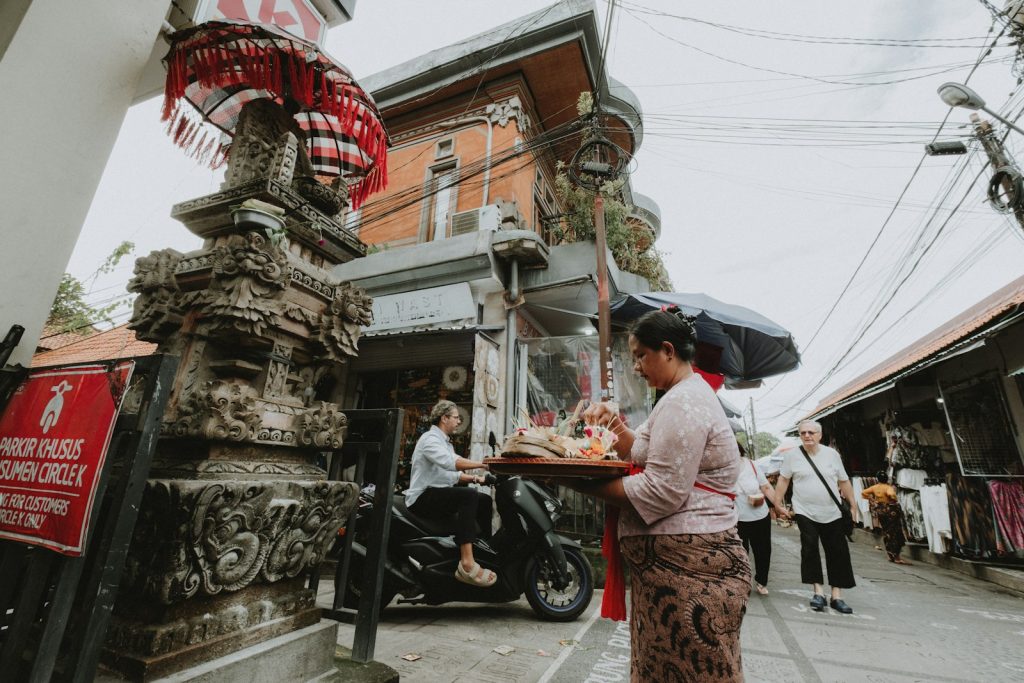
Canang sari, the daily offering
Those small trays you see everywhere are canang sari: a square of woven coconut leaf holding flowers in set colours, a pinch of rice and sometimes a sweet or a coin. They are made fresh every day and placed at family shrines, shop entrances and on the ground, where they are meant for the lower spirits.
Walk around them where you can. If you do step on one by accident, nobody expects an apology; the offering has already been given.
Temples everywhere
Every village has at least three temples: the Pura Puseh for the founders, the Pura Desa for everyday village life and the Pura Dalem for the dead. Above them sit the great directional temples that guard the whole island, such as clifftop Uluwatu in the southwest, and Besakih, the mother temple on the slopes of Mount Agung.
Religion here is not kept for Sundays. It sets the calendar, the architecture and the rhythm of every day.
Galungan and Kuningan
Bali runs on its own 210-day pawukon calendar, and its biggest festival comes around on it twice in some years. Galungan celebrates the victory of good over evil, when ancestral spirits are believed to return home. Tall bamboo penjor, curved and hung with offerings, line every street. Ten days later, Kuningan sends the spirits back.
Galungan fell on 17 June 2026 (Kuningan 27 June). In 2027 it falls on 13 January (Kuningan 23 January) and again on 11 August (Kuningan 21 August).
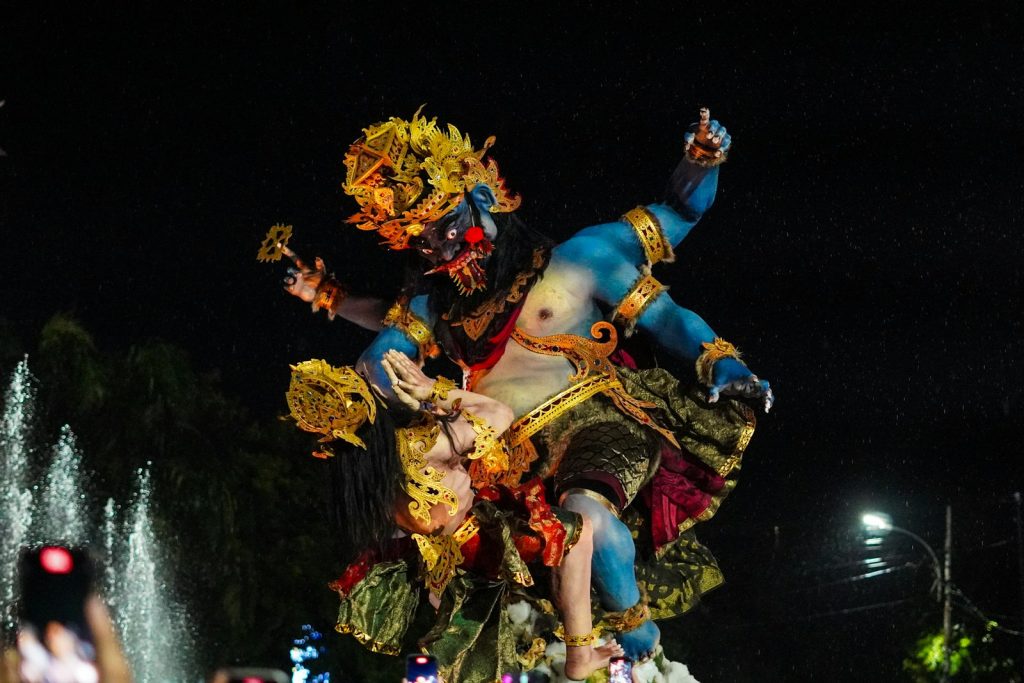
Nyepi, the Day of Silence
The Balinese new year is welcomed with a full day of silence. The night before, villages parade giant ogoh-ogoh demon figures made of bamboo and papier-mache through the streets, then burn them to chase bad spirits away.
On Nyepi itself there is no fire or light, no work, no travel and no entertainment. The airport closes for 24 hours from 06:00, and visitors stay inside their hotels. In 2027, Nyepi falls on Monday 8 March, according to the government holiday decree.
Dance and drama after dark
Balinese dance began as an offering to the gods and it still is. The most famous show for visitors is the Kecak at Uluwatu Temple, where dozens of men chant the rhythm while the Ramayana plays out against the sunset (tickets are sold separately from temple entry, around IDR 150.000). In Ubud, evening performances of Legong and Barong dances are held in the courtyard of Ubud Palace.
Five places to feel it
 01
01Temple · Uluwatu
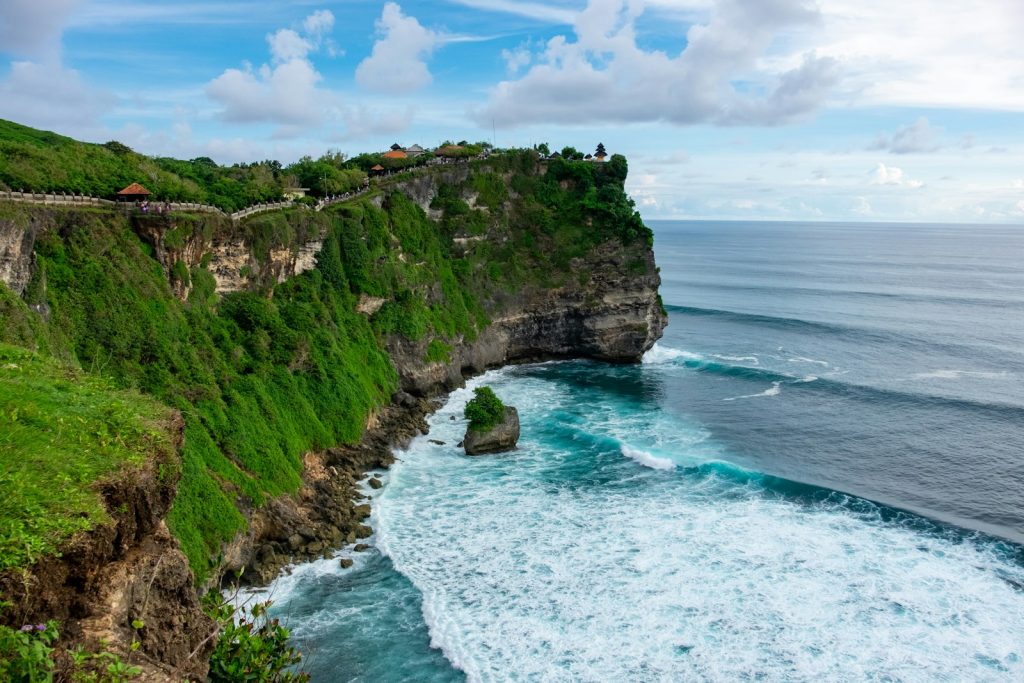
Uluwatu Temple
Clifftop temple and sunset Kecak dance
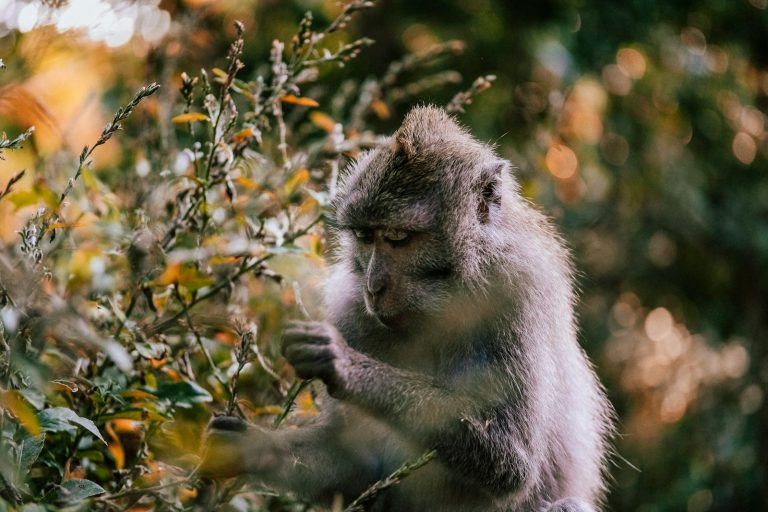
A clifftop sea temple at the tip of the Bukit Peninsula and the stage for Bali’s best-known Kecak performance at sunset. Come by 17:00 for a seat and hold on to your sunglasses: the resident macaques are expert thieves.
View details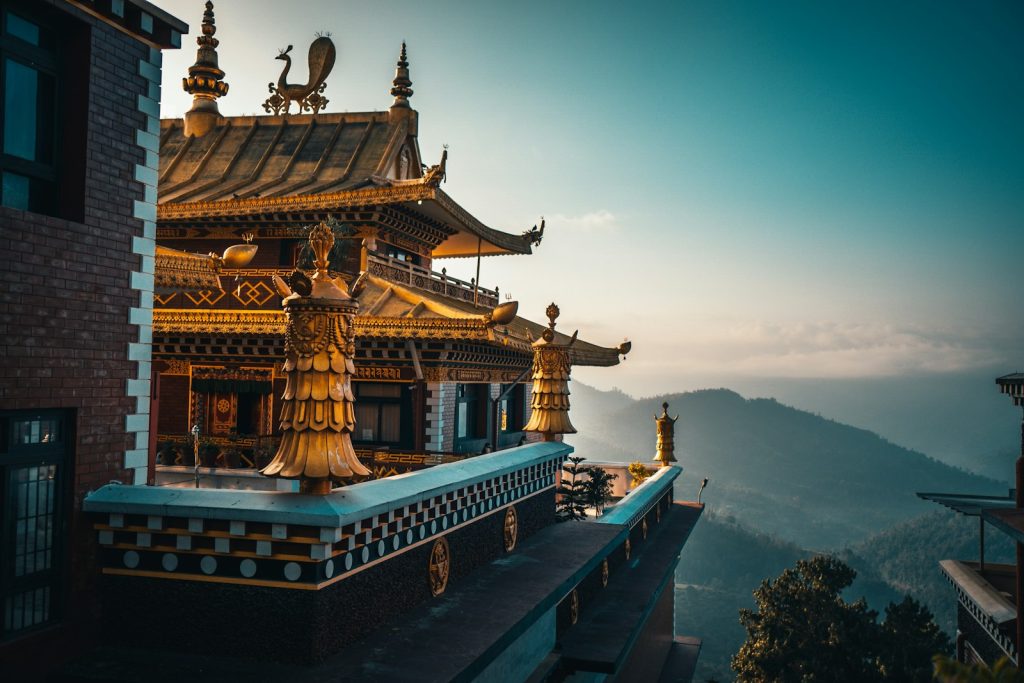 02
02Temple · Karangasem
Pura Besakih
The Mother Temple on Mount Agung
The mother temple: more than 20 temples terraced up the slopes of Mount Agung. Arrive early for clear mountain views and fewer crowds. Entry for foreign visitors includes a local guide, a sarong and the shuttle.
View details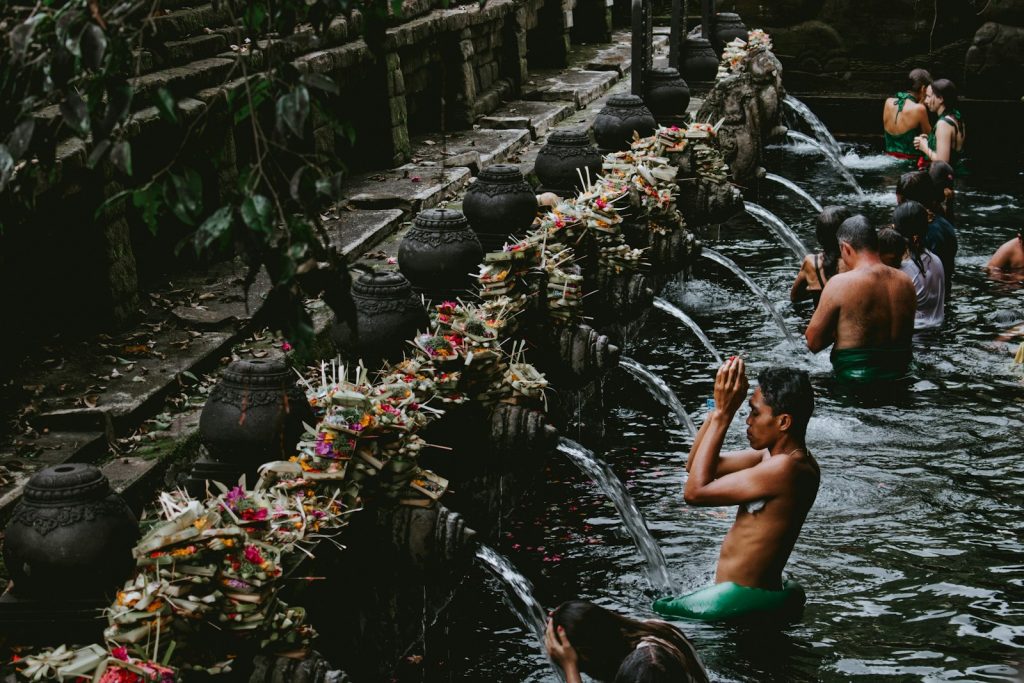 03
03Temple · Gianyar
Tirta Empul (Tampaksiring)
Bali's holy spring purification temple
A water temple built around a sacred spring, where Balinese families come to purify themselves under carved stone spouts. Visitors can join respectfully in a sarong; go before 10:00 and avoid ceremony days if you want to bathe.
View details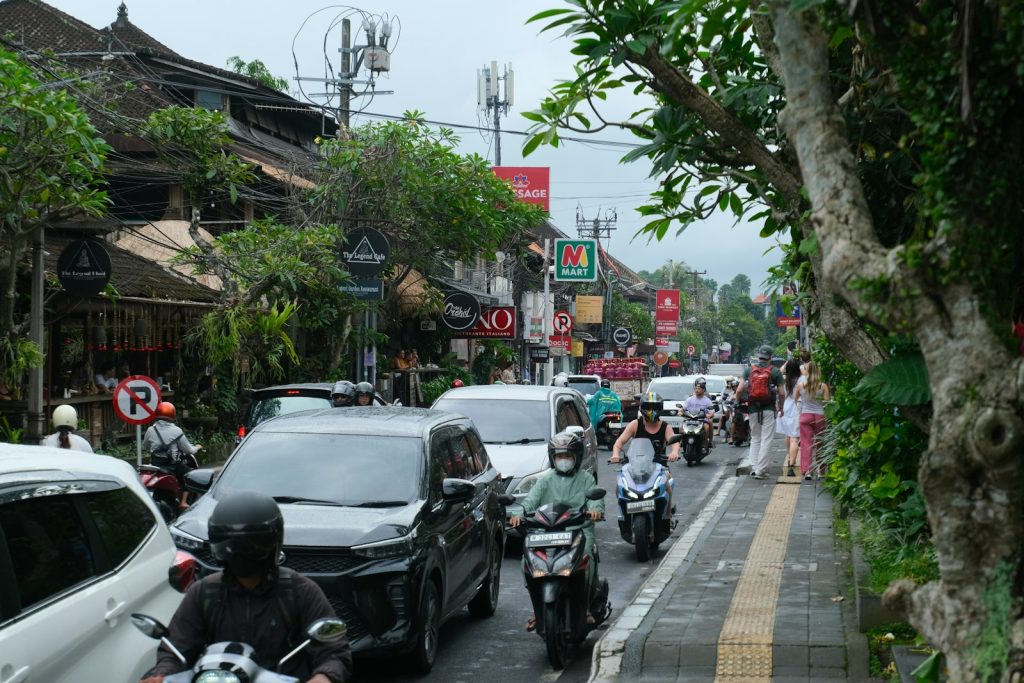 04
04Culture & Heritage · Bangli
Penglipuran Village
Bali's model traditional village
A car-free traditional village in the Bangli highlands with matching stone gates and spotless lanes. It is at its most beautiful around Galungan, when penjor arch over the main street.
View details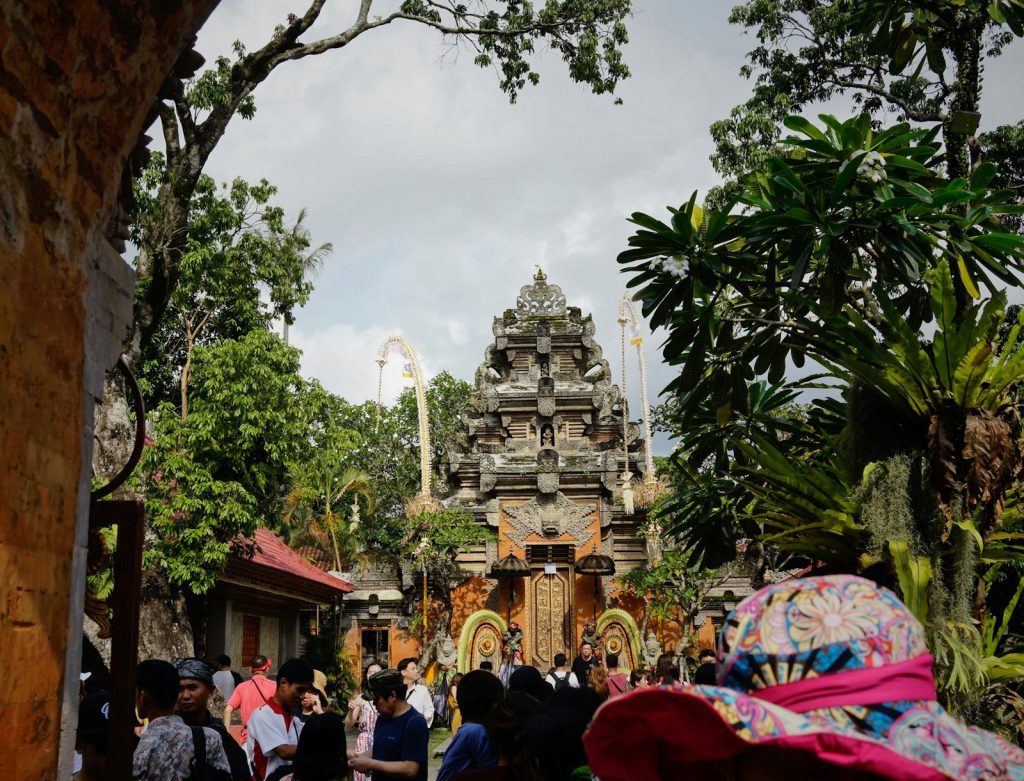 05
05Culture & Heritage · Ubud
Ubud Palace (Puri Saren)
The royal heart of Ubud
The home of Ubud’s royal family, with carved gateways you can admire by day and traditional dance performances in the courtyard by night.
View details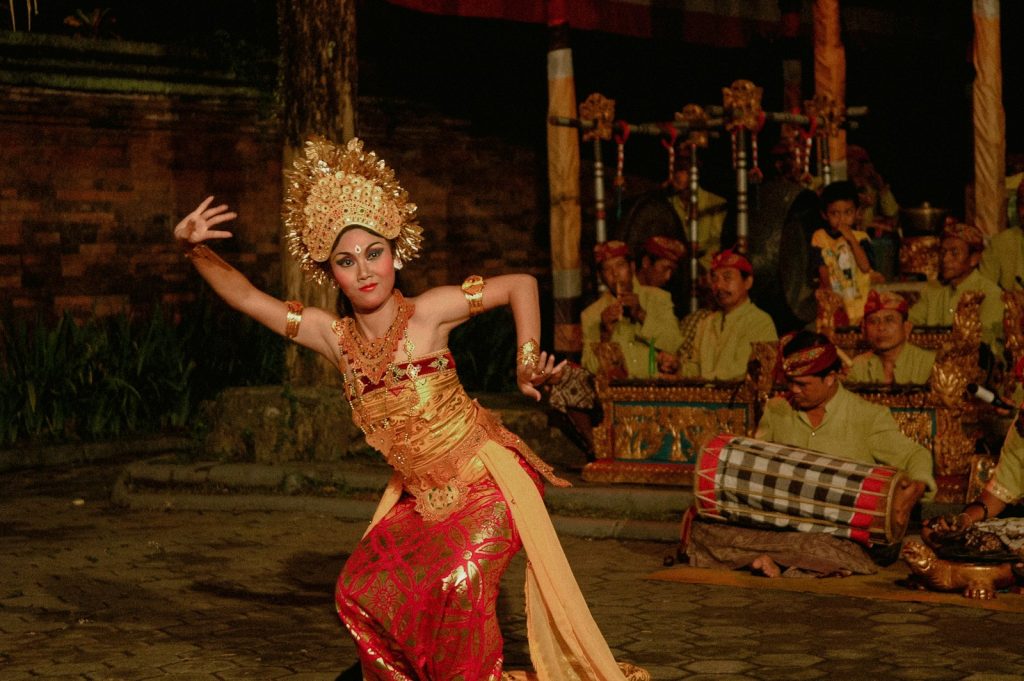
What’s in a name?
Most Balinese are named by birth order, not by choice. The first child is usually Wayan, Putu or Gede; the second Made or Kadek; the third Nyoman or Komang; the fourth Ketut. A fifth child starts the cycle again. So when three of your drivers are called Made, nobody is joking.
Be a good guest
- Wear a sarong and sash in temples. Most sites include one with the ticket or rent one at the gate.
- Cover your shoulders and knees, and never climb on shrines or walls for a photo.
- Do not stand higher than a priest or step in front of people praying.
- Signs at many temples ask women who are menstruating not to enter. Respect them.
- Give way to processions on the road; traffic stops for ceremonies, and so should you.
- Use your right hand to give or receive, and never touch anyone on the head.